Most people buy an engagement ring once, with little experience and a lot at stake. This guide covers the budget, the stone, the metal, and the size, step by step, so you can choose with confidence.
On this page
- 6 steps to choosing the perfect engagement ring
- How to set a realistic budget
- Diamond or gemstone, what to choose
- Which ring style suits her?
- Gold or platinum, which metal?
- How to find her size without ruining the surprise
- Common mistakes to avoid
6 Steps to Choosing an Engagement Ring
The shortest, most effective way to choose an engagement ring, step by step:
- Set a budgetThe old “two to three salaries” rule isn’t mandatory. Decide what you can comfortably spend, and stick to it.
- Learn her tasteNotice the jewelry she wears day to day. Delicate or bold? Modern or classic? Yellow, white, or rose? This gives you a clear direction.
- Choose the stoneA round diamond is the classic, but there are other options, oval, princess, emerald. It’s worth understanding what she loves.
- Choose the metal18K gold (75% pure gold) is rich and luxurious in tone but softer and scratches more easily. 14K gold is more durable and economical, an excellent choice for a ring worn every day. As for color: white gold highlights the diamond, yellow conveys classic elegance, and rose is romantic.
- Find her sizeThis is sometimes the hard part, we’ll cover methods below.
- Consult a professionalAn experienced jeweler will guide you, suggest alternatives within budget, and make sure you get the right ring.
How to Set a Realistic Budget
The budget for an engagement ring in Israel varies widely, from ₪2,500 to tens of thousands. Each range suits different people, and there’s no single “right” one.
| Budget | What you can find |
|---|---|
| ₪2,500–4,000 | A gold ring with a small diamond (0.2–0.3 carat) or another stone |
| ₪4,000–6,000 | A medium diamond (0.3–0.5 carat) of good quality, or a more stylish design |
| ₪6,000–12,000 | A larger diamond (0.5–0.9 carat) or a higher-quality stone |
| ₪12,000+ | A premium diamond (1+ carat), unique styles, full custom design |
The prices in the table are a general estimate for illustration only. The actual price is determined by the diamond’s quality and characteristics (color, clarity, and cut), and by whether it comes with a lab certificate (GIA / IGI). For an accurate quote tailored to you, we’d be happy to help; just get in touch.
Money-saving tip: Considering a diamond? A lab-grown diamond is identical to a natural diamond in material and appearance, the same carbon and the same sparkle, and costs significantly less, so for the same budget you can choose a much larger stone. Read the full lab-grown diamond guide →
Diamond or Gemstone, What to Choose
A diamond is the traditional choice, but not the only one. This is a style decision that will last for decades:
Classic Diamond
Maximum durability (very hard to scratch), timeless sparkle, lasting investment value. Downside: expensive for its size.
Lab-Grown Diamond
A real diamond in every way, identical to a natural diamond in chemical composition, appearance, and sparkle, but created in a lab. Upside: a significantly lower price for the same size and quality, which lets you choose a larger, more impressive stone for the same budget. It is also a more environmentally friendly choice. Downside: lower resale value than a natural diamond.
Sapphire, Emerald, Ruby
Colored stones that add personality. Upside: impressive size at a reasonable price. Downside: softer than a diamond, requiring more careful handling.
Moissanite
Looks similar to a diamond at about a third of the price. Excellent for an everyday ring. Downside: lower resale value.
Which Ring Style Suits Her?
The 4 classic styles in engagement ring design:
Solitaire
A single diamond on a simple band. The timeless classic. Suits someone who loves minimalist elegance.
Halo
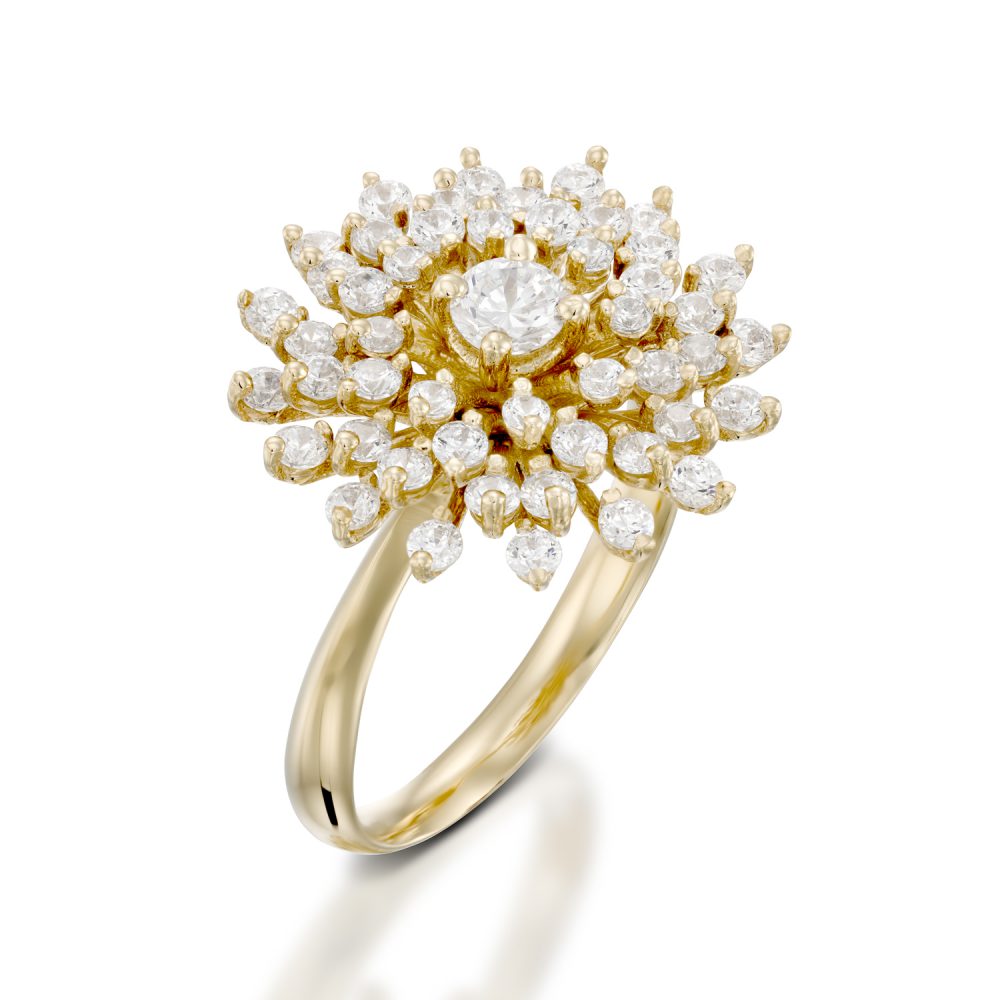
A central diamond surrounded by small diamonds. Looks large and impressive on a reasonable budget.
Three Stone (Trilogy)
A central diamond and two smaller diamonds. A symbol of the relationship’s “past, present, and future.”
Vintage / Art Deco
A design with fine, ornate details. For someone who loves a romantic, distinctive style.
Gold or Platinum?
White 18K gold: the most popular choice for an engagement ring. Elegant, highlights the diamond, and relatively easy to maintain.
14K gold: more durable, good for someone who uses their hands a lot. A slightly less rich color, but more stable over time.
Platinum: 20–30% more expensive than white gold for the same design. Heavier (a “rich” feel), hypoallergenic, and unlike white gold it never needs re-plating.
Yellow or rose gold: if she loves these colors, don’t hold back. An engagement ring in yellow or rose is fashionable and distinctive.
How to Find Her Size Without Revealing the Surprise
This is the tricky part. Here are a few methods that work:
- Ask a close friend or family memberThey know her size or can find a ring of hers to measure.
- “Borrow” one of her rings for a few hoursTake a ring she wears on the same finger to a jeweler for exact measurement, and return it before it’s missed.
- Use an existing ring of hersIf you have access to her jewelry box, discreetly measure a ring she wears on her fourth finger.
- Estimate by scaleThe standard ring size for women in Israel is 14. Petite women (around 1.60 m) are usually about 13–14, and taller women (1.70+) usually 14–16.
- Make a careful guess, and adjust after the proposalSimply go with the standard size 14 and take it in for adjustment after the proposal. Most rings can be sized up or down by ±2 sizes.
Common Mistakes to Avoid
1. Overspending. There’s no “rule” of 2–3 salaries. Spend what you can comfortably afford.
2. Buying under pressure. Don’t buy “on impulse” because you saw a friend with a beautiful ring. Take your time, compare, and research.
3. Ignoring her personal style. A beautiful ring is pointless if it doesn’t suit her taste.
4. Not asking for a certificate. Every diamond over 0.5 carat should come with a quality certificate.
5. Buying online without seeing it. For an item like this, it’s always better to see it with your own eyes before buying.